Cannabis Addiction
Cannabis Addiction Treatment in Melbourne & Online

Last updated . Reviewed for accuracy by Adam Szmerling. Accredited Mental Health Social Worker (AASW) and PACFA Registered Clinical Psychotherapist
Tonight was going to be a night off, and you rolled one anyway.
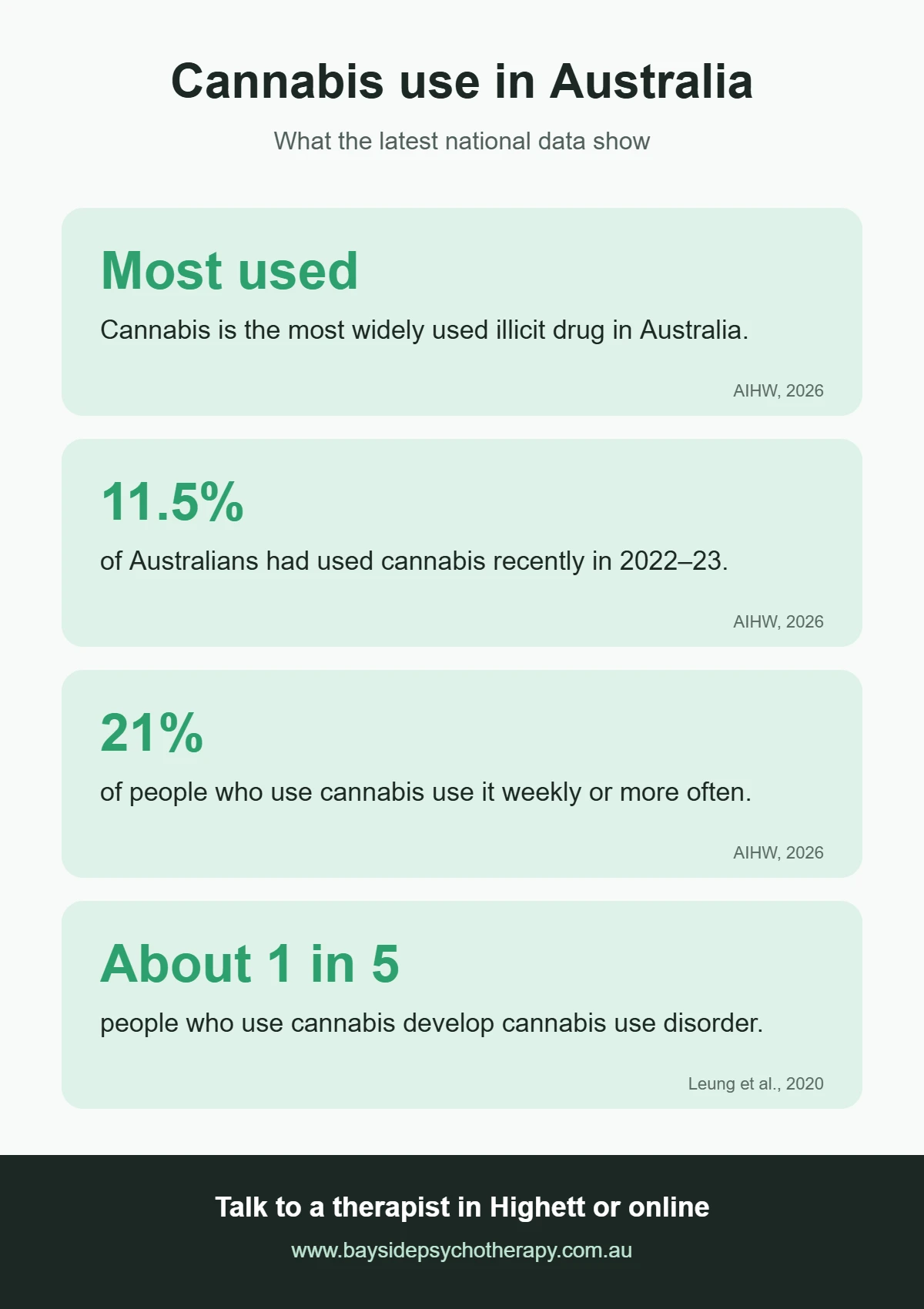
Cannabis addiction, also called cannabis use disorder, is when you keep using cannabis even though it is costing you sleep, money, drive or relationships, and cutting back doesn’t hold. In 2022–23, 11.5% of Australians had used cannabis recently, and about 1 in 5 of them used it weekly or more. You can work with a counsellor, hypnotherapist, psychotherapist or clinical psychologist, in our Highett rooms or by video.
Choose video or Highett and a time that suits you. You pay securely via PayPal when you book, and reception can move your appointment if you give at least 3 business days’ notice. Would rather speak to someone first? Call (03) 9557 9113 on weekdays, 8:30am to 5:30pm.
- $170 a 50-minute session with most of our therapists, and you can book without a referral
- Medicare rebates for sessions with Adam Szmerling ($200) or Natalie Szmerling ($250) under a GP Mental Health Treatment Plan
- Weekday evenings and Saturdays 8am to 6pm, depending on the therapist
On this page: Cannabis check · Which approach · Hypnotherapy · Rehab or therapy · Fees · Family · FAQs
Therapists who work with cannabis addiction
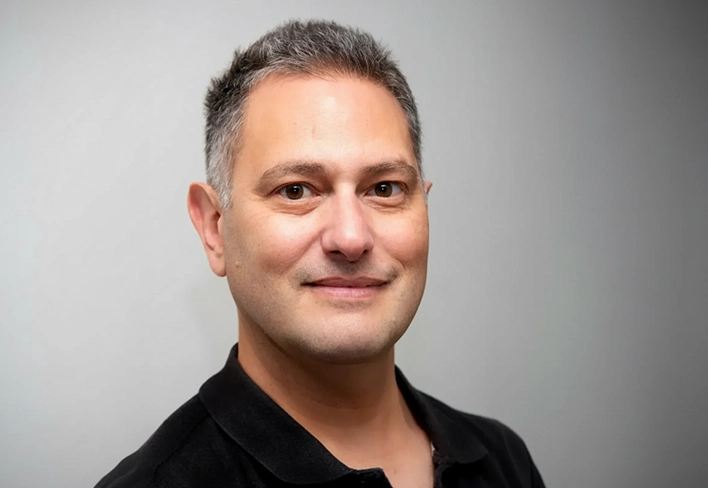
Adam Szmerling
Psychoanalytic Psychotherapist
- 20+ years of experience
- $200 per 50-min session
 Medicare rebate with a GP Mental Health Treatment Plan
- Available in-person & online
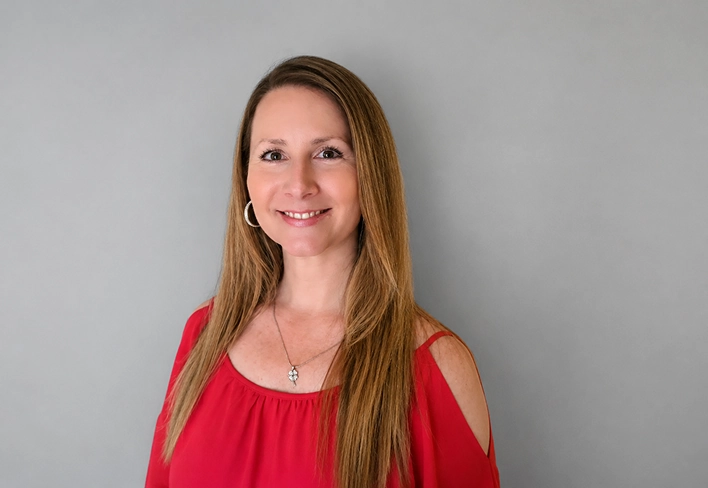
Carolina Rosa
Counsellor & Hypnotherapist
- 10+ years of experience
- $170 per 50-min session
- Available in-person & online
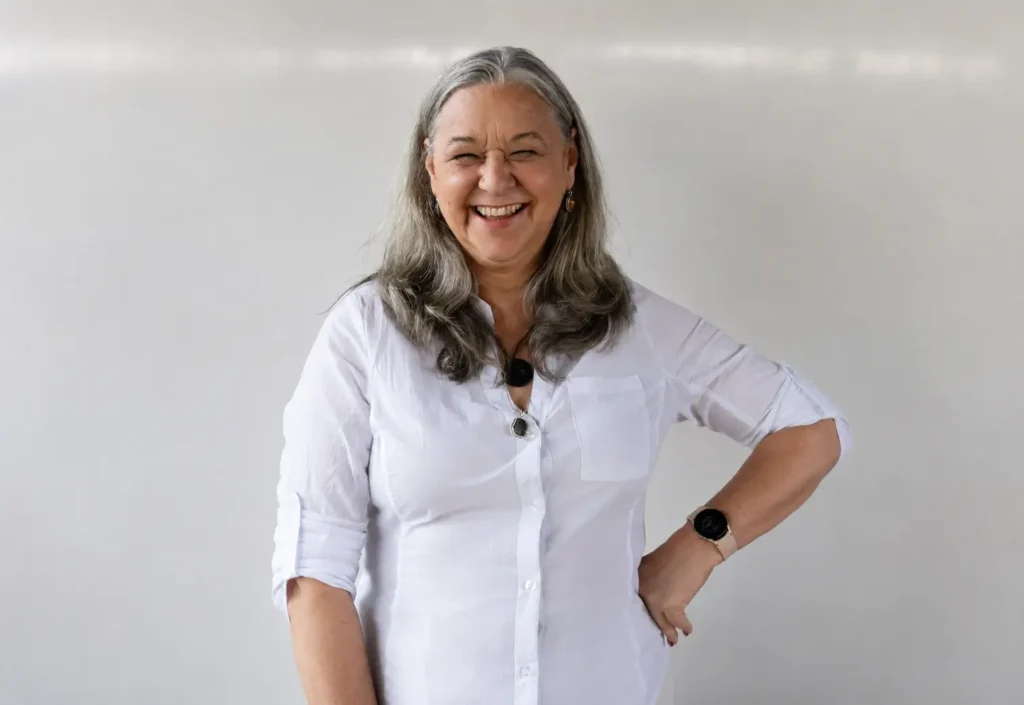
Bernadette Cameron
Hypnotherapist, Counsellor, NLP Master Practitioner
- 5+ years of experience
- $170 to $200 per 50-min session
- Available in-person & online
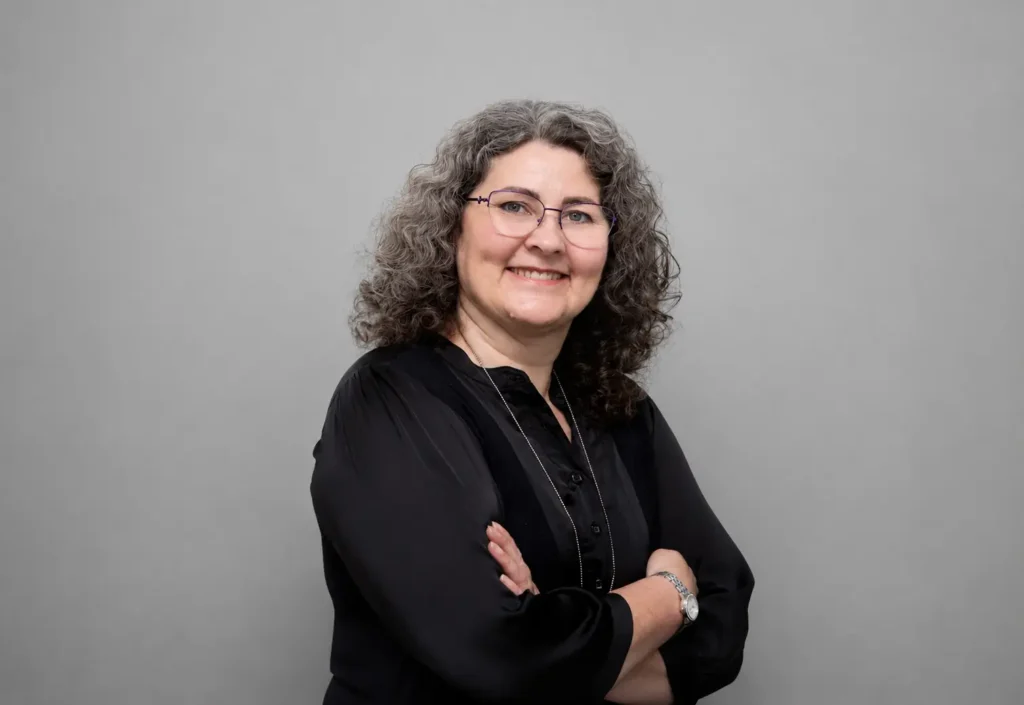
Sara Herring
Clinical Hypnotherapist & Counsellor
- 20+ years of experience
- $170 per 50-min session
- Available online
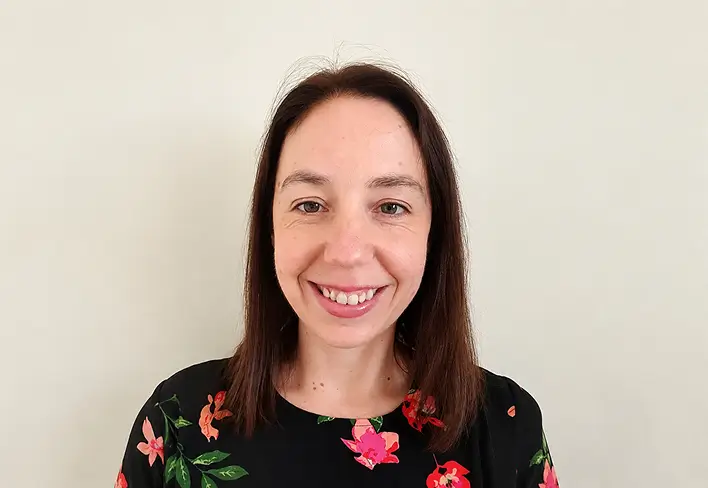
Natalie Szmerling
Clinical Psychologist
- 15+ years of experience
- $250 per 50-min session
- Medicare rebate with a GP Mental Health Treatment Plan
- Available in-person & online
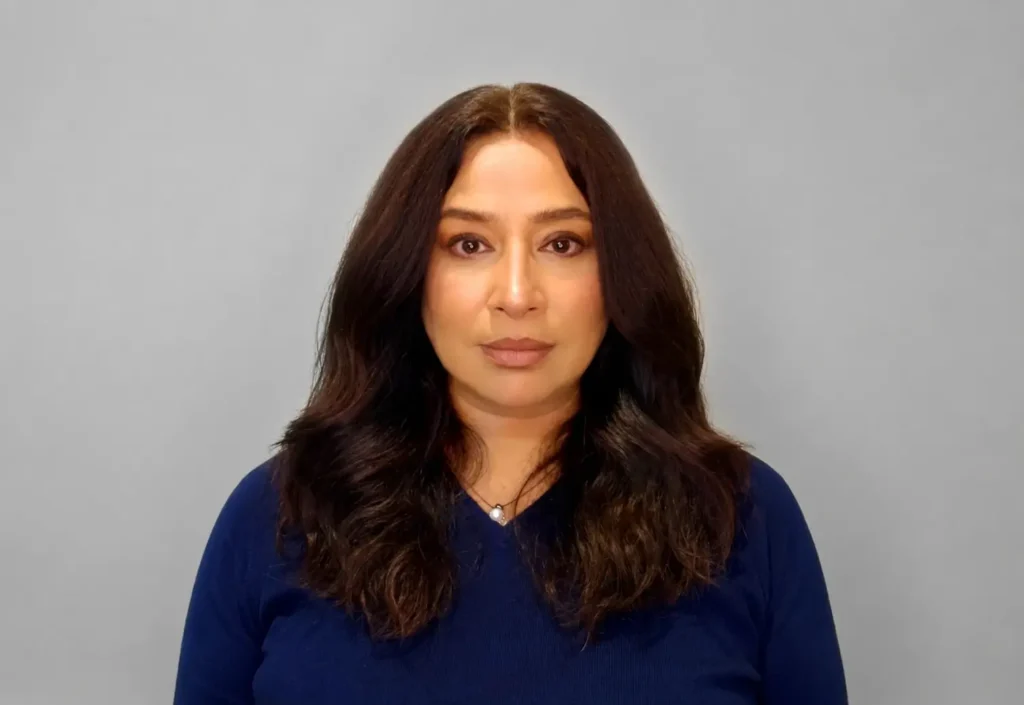
Humaira Ansari
Hypnotherapist, NLP Practitioner, Psychotherapist and Counsellor
- 16 years of experience
- $170 to $200 per 50-min session
- Available online
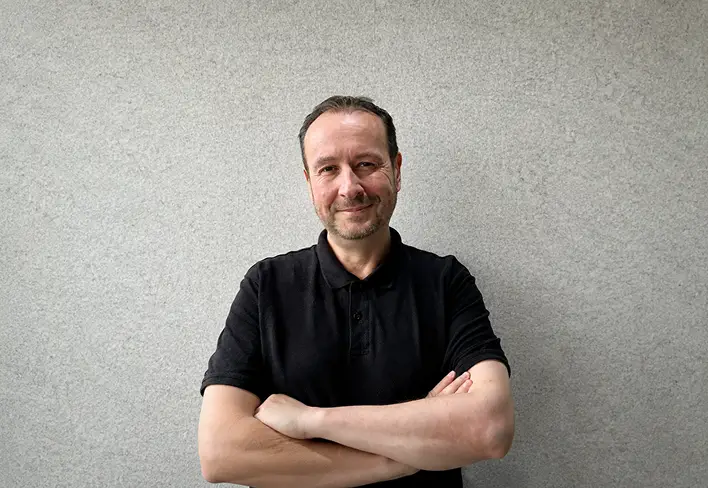
Lawrence Akers
Hypnotherapist & Counsellor
- 10 years of experience
- $170 per 50-min session
- Available in-person & online
Kelli Tranter
Hypnotherapist & Counsellor
- 10+ years of experience
- $170 per 50-min session
- Available online
What is cannabis addiction?
Plenty of people use cannabis without it taking over. It becomes a problem when you need it to get through the day or to sleep, keep using more than you planned, and find that a week without it feels out of reach. Doctors call this cannabis use disorder.
It is more common than many people expect. A 2020 review of 21 studies found that 22% of people who use cannabis met the criteria for a use disorder, and among young people using weekly or daily, about 1 in 3 became dependent. In Australia, cannabis was the main drug of concern in about 30,300 alcohol and drug treatment episodes in 2024–25, 14% of the total.
Signs and symptoms of cannabis addiction
Signs that cannabis has moved from habit to problem include:
- Smoking larger amounts, or on more days, than you set out to
- Deciding to cut back and finding the plan lasts a few days
- Cravings, or planning the next smoke well before the evening
- Needing more to feel the same effect
- Missing work, study or family commitments, or getting through them stoned
- Driving or operating machinery after using
- Dropping people and activities you used to enjoy
- Playing down how much you use to the people closest to you
Withdrawal is part of it. People who use regularly and then stop often feel irritable, anxious or low, sleep badly, lose their appetite and have vivid dreams. Healthdirect says these symptoms are usually worst 1 to 4 days after stopping and can last about 3 weeks.
What people tell us (composite)
“It’s only at night. I tell myself that means it’s under control.”
“I stopped for nine days once. Day three I was climbing the walls. By day nine I was back.”
“I can’t sleep without it, and I’m not sure I ever could.”
“My partner thinks the weed is the problem. I think it’s the only thing keeping me level.”
Check your cannabis use in two minutes
These eight questions are the Cannabis Use Disorders Identification Test, Revised (CUDIT-R), a screening tool developed and tested by Australian and New Zealand researchers. Answer for the last 6 months unless a question says otherwise. Your score is worked out on this page, and nothing you click is stored or sent.
Question 1 of 8
- How often do you use cannabis?
- How many hours were you “stoned” on a typical day when you had been using cannabis?
- How often during the past 6 months did you find that you were not able to stop using cannabis once you had started?
- How often during the past 6 months did you fail to do what was normally expected from you because of using cannabis?
- How often in the past 6 months have you devoted a great deal of your time to getting, using, or recovering from cannabis?
- How often in the past 6 months have you had a problem with your memory or concentration after using cannabis?
- How often do you use cannabis in situations that could be physically hazardous, such as driving, operating machinery, or caring for children?
- Have you ever thought about cutting down, or stopping, your use of cannabis?
Your score
Below 8. This is under the level the CUDIT-R treats as hazardous use. If cannabis still bothers you, it is worth talking about anyway. If someone else’s use is what brought you here, see If someone close to you uses cannabis below.
Hazardous use (8 to 11). The CUDIT-R treats this range as hazardous cannabis use. It is a good time to look at when you use, what it does for you and what it is starting to cost. A session in Highett or by video is one place to do that.
Connect nowPossible cannabis use disorder (12 or more). In the CUDIT-R, this range points to a possible cannabis use disorder that is worth a proper assessment. A screening score can’t diagnose anything, and a first session is where that conversation can start.
Connect nowFree support, day or night: DirectLine on 1800 888 236 in Victoria, or Counselling Online. If you’re thinking about suicide, call Lifeline on 13 11 14. In immediate danger, call 000.
Questions from the Cannabis Use Disorders Identification Test, Revised (Adamson and colleagues, 2010), which the authors have placed in the public domain. A screening score can’t diagnose a cannabis use disorder.
What causes cannabis addiction?
Cannabis has a pull of its own. With regular use, tolerance builds so the same amount does less, and stopping brings withdrawal, which makes the next smoke feel like relief. The risk is highest for people who start young and use often.
Mood and cannabis are closely tied. Long-term use is linked with a higher risk of depression, anxiety, psychosis and suicidal thoughts, and young people who use THC have a higher risk of psychosis or schizophrenia later in life. If you are having thoughts of suicide, Lifeline is on 13 11 14 at any hour.
What we think: most quitting advice treats cannabis as the whole problem, so the plan is to remove it: throw out the stash, avoid the friends, get through the first week. Those steps help, and the drug’s own pull is real. In our experience cannabis is usually also doing a job. It gets someone to sleep, turns down a mind that won’t settle, dulls pain or fills the evening once the house is quiet. When the cannabis goes and the job stays, the job tends to win. So we look at what the cannabis has been managing as closely as how much you use.
Which cannabis addiction treatment suits you?
It depends on what you want to change, how much you use and what you have already tried. Working that out is part of the first session, and whether the aim is to stop or to use less is decided with you, case by case.
If one approach stalls, your therapist may suggest a colleague here who works differently. We refer to each other when that suits you better.
| Approach | What it involves | Who offers it |
|---|---|---|
| Counselling and clinical hypnotherapy | Works on the habit itself: when you use, what sets off a craving, the evening routine and the first weeks without it. Hypnotherapy rehearses a calmer response to cravings in a relaxed, focused state, often alongside counselling in the same session. Some of these therapists also draw on ACT, CBT or mindfulness. | Carolina Rosa (AACHP); Bernadette Cameron (AACHP); Sara Herring (AACHP; Hypnotherapy Council of Australia); Kelli Tranter (AACHP; Hypnotherapy Council of Australia); Lawrence Akers (GoAH); Humaira Ansari (AHA), who also practises psychotherapy |
| Psychoanalytic psychotherapy | Looks at what the cannabis does for you and what it may be holding down. In depth and open-ended, often over months or years. | Adam Szmerling, PACFA Registered Clinical Psychotherapist and AASW Accredited Mental Health Social Worker |
| Clinical psychology | CBT, DBT, motivational interviewing, schema therapy and a trauma-informed approach, for adults. A Cochrane review found psychological treatments reduced how often people used cannabis, with the most consistent support for combined motivational and cognitive behavioural therapy. | Natalie Szmerling, clinical psychologist registered with AHPRA; Australian Psychological Society member |
| Couples sessions | You and your partner together, when cannabis is straining the relationship. | Adam Szmerling, Bernadette Cameron, Humaira Ansari |
Hypnotherapy for cannabis addiction
Hypnotherapy for cannabis is available with six of our therapists. In Highett or by video: Carolina Rosa, Bernadette Cameron and Lawrence Akers. By video only: Sara Herring, Humaira Ansari and Kelli Tranter.
Hypnosis is used to take the edge off cravings and to practise a different response to the moments you usually reach for cannabis. It is real therapy and it has limits, so your hypnotherapist may add counselling, and will say so if another approach looks a better fit. Most people come for somewhere between 6 and 20 sessions.
Each session is $170 and Medicare doesn’t rebate hypnotherapy. Some private health funds pay towards sessions with members of the AHA or GoAH. Humaira Ansari (AHA) and Lawrence Akers (GoAH) belong to those associations, so check your extras cover first.
To book, press Connect now on one of their cards, or call (03) 9557 9113 and ask for a hypnotherapist.
Rehab or therapy for cannabis?
We are an outpatient practice. There are no beds, no detox and no prescribing, and you go home after each session.
Start with your GP, or call DirectLine on 1800 888 236 (free and 24 hours in Victoria), if your use is very heavy, you are using ice or other drugs as well, or you are too affected to get through the days between sessions. Supervised withdrawal or a residential program usually comes first in those situations, and we refer on. We also refer on when someone has psychotic symptoms or is at risk of harming themselves or someone else.
Other free help: Counselling Online offers chat and email support 24/7, and the National Alcohol and Other Drug Hotline is on 1800 250 015.
Here you can choose the therapist and the approach, see them in person or by video, and keep your work and home life going.
Ready to talk about your cannabis use?
What happens when you book
Book online or through reception, then fill in an intake form before the first session.
In the first session your therapist asks how much and how often you use, what cannabis does for you, what you have tried before and which parts of it helped. You agree on a goal together, whether that is stopping or using less, and it can change as you go.
With Natalie and our counsellors and hypnotherapists, therapy usually runs 6 to 20 sessions. Psychotherapy with Adam is open-ended and can continue for months or years.
If the time stops working for you, call reception or email your therapist at least 3 business days beforehand to move it.
Fees and Medicare rebates for cannabis addiction therapy
Every session runs 50 minutes. Payment is in full when you book, and you claim any rebate yourself afterwards. We don’t bulk bill and we don’t sell packages.
- Adam Szmerling (psychoanalytic psychotherapy): $200 a session. With a GP Mental Health Treatment Plan, Medicare rebates $89.50 (item 80160 in the rooms, 91176 by video, 91188 by phone), so you pay $110.50.
- Natalie Szmerling (clinical psychology): $250 a session. On the same kind of plan, Medicare rebates $149.05 (item 80010 in the rooms, 91167 by video, 91182 by phone), so you pay $100.95.
- Carolina Rosa, Bernadette Cameron, Sara Herring, Humaira Ansari, Lawrence Akers and Kelli Tranter (counselling, psychotherapy and hypnotherapy): $170 a session, with no Medicare rebate.
- Couples sessions: $200, and we don’t claim Medicare rebates for couples work.
Rebates cover up to 10 sessions each calendar year. Hypnotherapy is not Medicare-rebated; if you have extras cover, ask your fund what it pays towards an AHA or GoAH member.
If cost is a barrier, DirectLine and Counselling Online are free.
You only need a GP referral if you want to claim Medicare.
If someone close to you uses cannabis
Living with someone’s cannabis use can be worrying and wearing. You can see one of our therapists on your own, whether or not they want help.
Couples sessions are available with Adam, Bernadette or Humaira at $200 for 50 minutes, with no Medicare rebate. If your partner already sees one of us individually, couples work is usually with a different therapist, and sometimes a partner joins one or two of their individual sessions instead.
We don’t offer couples work where there is family violence, coercive control, a child-protection matter or a Family Court matter.
Family Drug Support runs a free 24/7 line for families on 1300 368 186.
Cannabis addiction FAQs
What counts as cannabis addiction?
It counts as a problem when cannabis keeps overriding your own plans: you use more than you meant to, can’t cut back, need more for the same effect, feel withdrawal when you stop, or carry on despite harm to work, health or relationships. The Alcohol and Drug Foundation describes dependence as feeling you need cannabis just to get through the day. The two-minute check above is a starting point.
How long does cannabis withdrawal last?
Symptoms usually start within a day or two of your last use, are worst around days 1 to 4, and mostly settle within about 3 weeks, according to healthdirect. Expect irritability, anxiety or low mood, poor sleep, vivid dreams, less appetite and restlessness. See your GP if symptoms are severe, or if you have felt unwell stopping before.
Is there rehab for weed addiction?
Yes. Victoria has withdrawal and residential rehab services that take people for cannabis, and your GP or DirectLine (1800 888 236, 24 hours) can refer you. If you want to stop while working and living at home, outpatient therapy like ours is the other route. We refer on when use is very heavy, other drugs are involved or someone is too unwell to manage between sessions.
Do I need a psychologist for cannabis addiction?
Not necessarily. Natalie Szmerling is our clinical psychologist and is AHPRA-registered. Our other seven practitioners are counsellors, hypnotherapists and a psychoanalytic psychotherapist, each named with their professional body in the table above, and all eight see people about cannabis. Medicare rebates apply with Adam Szmerling ($200) and Natalie ($250) under a GP Mental Health Treatment Plan.
Can hypnotherapy help me stop smoking weed?
Some people find it useful. Hypnotherapy is used to ease cravings and rehearse a different response to the moments you usually light up, often together with counselling. It suits people who want to change and are willing to look at what the cannabis does for them. Sessions are $170, and hypnotherapy has no Medicare rebate.
Do you see young people about cannabis?
Kelli Tranter, Carolina Rosa and Humaira Ansari sometimes work with people under 18 about cannabis, decided case by case. Our other practitioners, including Natalie Szmerling, see adults only. If a young person’s use is heavy or mixed with other drugs, their GP or DirectLine (1800 888 236) is the place to start.
Can cannabis cause anxiety or depression?
It can. Long-term cannabis use is linked with a higher risk of depression, anxiety and psychosis, and some people use cannabis to cope with anxiety or low mood that was there first. Both can be true at once. That is why we work on the mood and the cannabis together.
Related conditions and pages
Related pages:
- General addiction counselling
- Binge drinking help
- Cocaine addiction
- Quit smoking with hypnotherapy
- Insomnia help
- Anxiety treatment
- Every addiction we work with
- How psychotherapy works here
- Hypnotherapy at Bayside
For practice at home between sessions, there is a cannabis self-hypnosis recording, voiced by a professional voice artist.
Talk to a therapist about cannabis
Pick a time now, before tonight comes around.
Most of what changes things comes from you: a willingness to look at the part of you that wants to stop and the part that keeps reaching for cannabis. If you’re prepared to explore both, we can help. Choose Highett or video, pick a time, and pay securely with PayPal.
Want a hand choosing? Call reception on (03) 9557 9113, Monday to Friday, 8:30am to 5:30pm.
Directions to confidential cannabis counselling in Highett
Our rooms are at 8/539 Highett Road, Highett VIC 3190. Suite 8 has our name on its glass door.
Get directions in Google MapsNote: This information is informative only and is not to be used for diagnosis or substitution of appropriate assessment and/or treatment by your GP or another qualified health professional. We take care to keep our information accurate and up to date, but it may contain errors or omissions. To the extent the law allows, we’re not responsible for loss caused by relying on it, as explained in our Website Disclaimer.
If you are in immediate danger call 000. Lifeline 13 11 14 is available 24/7. For alcohol and other drugs in Victoria, DirectLine is free and open 24/7 on 1800 888 236.